Predictive Fall Risk AI: Revolutionizing Elderly Safety and Prevention in 2026
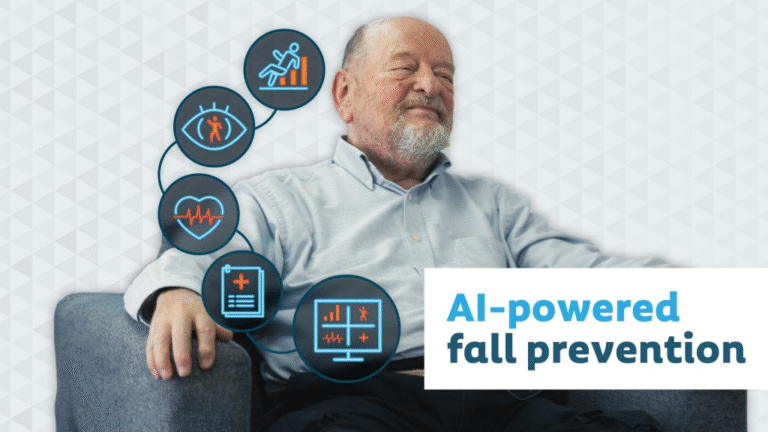
As the global population ages—projected to reach 1.6 billion people over 65 by 2050—falls remain a critical health crisis, causing over 37 million severe injuries annually according to the World Health Organization. But what if we could predict these falls before they happen? Enter predictive fall risk AI: advanced artificial intelligence systems that analyze patterns in movement, vital signs, and health data to forecast fall likelihood, enabling proactive interventions. Unlike reactive fall detection devices, which alert after an incident, AI fall risk assessment tools empower caregivers, doctors, and seniors to mitigate risks days, weeks, or even months in advance.
In 2025, predictive fall risk AI for elderly has matured into a cornerstone of geriatric care, integrating wearable tech, electronic health records (EHRs), and machine learning (ML) for personalized predictions. This guide explores how predictive fall risk AI works, spotlights the best AI tools for fall risk prediction, and highlights real-world impacts. Whether you’re a healthcare provider seeking AI-based fall prevention strategies or a family member exploring elderly fall risk prediction models, this resource equips you with actionable insights for safer aging.

Understanding Predictive Fall Risk AI: From Detection to Forecasting
Predictive fall risk AI shifts the paradigm from “what happened” to “what might happen.” Traditional tools like the Morse Fall Scale rely on static checklists—history of falls, gait instability, medications—but often miss nuances, achieving only 60-70% accuracy. In contrast, AI leverages vast datasets and algorithms to model dynamic risks, such as subtle gait changes signaling cognitive frailty or medication side effects increasing dizziness.
These systems classify risks into tiers (e.g., low: <10% chance in 30 days; high: >50% in 12 months) and recommend actions like physical therapy referrals or dosage adjustments. By 2025, adoption has surged, with NHS England’s nationwide rollout demonstrating 97% predictive accuracy in real-world settings. This not only prevents injuries but also cuts healthcare costs by up to 50%, as fewer emergency visits translate to billions in savings globally.
How Predictive Fall Risk AI Works: The Core Mechanics
At its heart, AI fall risk prediction follows a data-driven pipeline: collection, analysis, and action. Powered by machine learning for fall risk assessment, these systems process multimodal inputs for robust forecasts.
Step 1: Data Collection – Building the Risk Profile
Predictive AI thrives on diverse, real-time data streams:
- Wearable Sensors: Accelerometers and gyroscopes in devices like smartwatches track gait velocity, stride length, and balance—key indicators of instability. Chest-worn sensors, such as Fibion Vitals, add respiration and heart rate for a holistic view.
- Vital Signs and Biometrics: Blood pressure fluctuations or oxygen saturation dips, captured via apps or EHRs, flag acute risks like orthostatic hypotension.
- Behavioral and Environmental Data: Activities of Daily Living (ADLs) like standing or walking, sourced from IoT home sensors, combined with medication logs and historical falls.
- Advanced Inputs: Neuroimaging or smartphone usage patterns detect cognitive declines linked to 30% higher fall rates.
Privacy is paramount; edge computing processes data on-device, complying with GDPR and HIPAA.
Step 2: AI Analysis – Modeling the Future
Here, deep learning fall risk models shine, trained on datasets like PhysioNet’s eICU or SisFall to identify patterns humans overlook.
- Supervised ML Algorithms: Random Forests or Support Vector Machines (SVMs) weigh factors—e.g., a 20% gait slowdown boosts risk by 15%—outperforming traditional methods by 20-30% in diverse populations, including those with cognitive frailty.
- Hybrid Approaches: Fuzzy Logic handles uncertain vitals (e.g., “moderate” hypertension), while Deep Belief Networks (DBNs) process sequential ADL data. A meta-model ensembles these for unified predictions, achieving 90% accuracy and 100% specificity.
- Time-Series Forecasting: Long Short-Term Memory (LSTM) networks predict over horizons like 3-12 months using EHR trends, spotting escalations like increasing sedative use.
Explainable AI (XAI) demystifies outputs, showing “why” a risk score rose (e.g., “due to recent BP spike”).
Step 3: Actionable Insights – From Prediction to Prevention
Outputs trigger tailored alerts: a GP dashboard suggesting med tweaks or a patient app prompting balance exercises. Integration with telehealth enables seamless follow-ups, reducing falls by 40-80% in trials.
The Best AI Tools for Predictive Fall Risk in 2025
2025’s landscape features innovative AI fall prevention tools, from wearables to clinical DSS. Here’s a curated list of top performers, evaluated on accuracy, usability, and impact:
| Tool/System | Key Features | Accuracy | Best For | Cost Estimate |
|---|---|---|---|---|
| Cera AI (NHS-Approved) | Real-time vital monitoring via carer app; flags 5,000 daily risks; virus detection bonus. | 97% | Home care, integrated systems. | Subscription-based (~£20/month per user). |
| Cooperative AI Meta-Model | Fuzzy Logic + DBN for vitals/ADLs; ensemble Random Forest; 5 risk levels. | 90% overall, 100% specificity. | Research/clinical settings; scalable to wearables. | Open-source adaptable; dev costs vary. |
| Amsterdam UMC Medication Optimizer | 12-month risk forecast from med data; GP dashboard + patient portal for discussions. | Not specified; high satisfaction in pilots. | Polypharmacy management in primary care. | Free for GPs via integration. |
| Fibion Vitals Wearable | Chest sensor for gait, HR, respiration; AI pattern recognition for pre-fall alerts. | 95%+ in gait analysis. | Active seniors; daily monitoring. | $150-300 device + app sub. |
| MOBOTIX AI Sensors | Camera-based movement tracking; predicts via irregular patterns; non-invasive. | 92-98% in hospital trials. | Facilities like nursing homes/hospitals. | $500-2,000 per unit install. |
| OK2StandUP | Remote monitoring pre-standup risks; behavioral AI for cognitive flags. | 88% predictive for activity risks. | Frail seniors in care; staff alerts. | SaaS model (~$10/resident/month). |
| SafelyYou Halo | 24/7 AI with video; predicts via activity trends; extends length-of-stay. | 99% detection, 85%+ prediction. | Senior living communities. | $1,000+ annual per facility. |
These top predictive fall risk AI tools prioritize ease-of-use, with many offering free trials. For instance, Cera’s tool has prevented 2,000 daily admissions in the UK by enabling community-based interventions.
Real-World Applications and Case Studies
Predictive fall risk AI excels in diverse settings:
- NHS England Rollout: Since July 2023, Cera’s system has monitored 2 million monthly home visits across 2/3 of integrated care systems, slashing hospital admissions by 70% through early vital-based alerts.
- Senior Care Facilities: MOBOTIX in U.S. hospitals reduced falls by 40% by analyzing bed-exit patterns, alerting staff pre-incident. Similarly, SafelyYou extended resident stays by 4+ months via predictive insights.
- Community and Research: The Amsterdam tool boosted GP-patient satisfaction by 25% in pilots, optimizing meds to curb dizziness-related risks. A multicenter study showed AI outperforming rules-based systems by 15% in heterogeneous elderly groups.
In Parkinson’s cohorts, longitudinal ML predicted near-falls with 85% sensitivity, guiding tailored rehab.
Benefits and Challenges of AI Fall Risk Prediction
The upsides are compelling:
- Proactive Prevention: Early warnings enable 40-80% fall reductions, preserving independence and cutting ER visits by 50%.
- Personalization and Equity: Models adapt to demographics, addressing biases in traditional tools for better outcomes in frail or minority groups.
- Efficiency Gains: Automates assessments, freeing nurses for interventions—vital as staffing shortages hit 20% in eldercare.
Yet challenges persist:
- Data Quality and Bias: Small datasets limit generalizability; solutions like federated learning are emerging.
- Adoption Barriers: Integration with legacy EHRs and privacy concerns slow uptake, though 5G edges enable secure, real-time processing.
- Ethical Considerations: Over-reliance on AI risks deskilling clinicians, but hybrid human-AI models mitigate this.
Future trends? Multimodal fusion (gait + genomics) and generative AI for simulated scenarios could push accuracies to 95%+ by 2030.
Conclusion: Embracing Predictive Fall Risk AI for a Safer Future
Predictive fall risk AI isn’t just technology—it’s a compassionate shield against the vulnerabilities of aging. By harnessing AI fall risk assessment tools like Cera or Fibion Vitals, we can forecast dangers, customize care, and reclaim joy in daily life for millions. As 2025 closes, with tools like the NHS’s 97% accurate predictor scaling globally, the message is clear: prevention is possible, and AI is leading the way.
For families, start with a wearable trial; for providers, integrate a DSS today. Explore resources from NCOA or NHS for implementation guides. Together, let’s turn fall risks into managed realities—because every step forward deserves to be steady.
About the Author