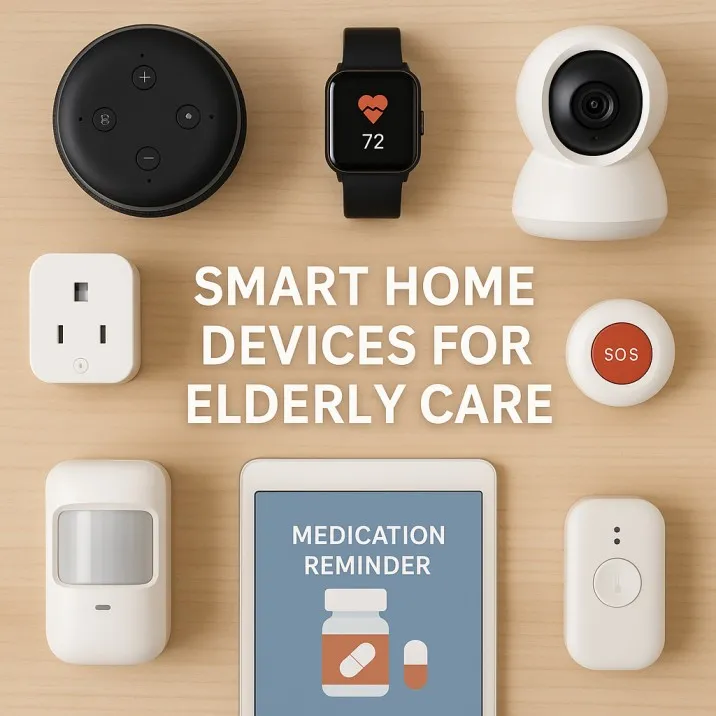
AI Smart Pill Dispensers in 2026: Revolutionizing Medication Management for Seniors
In the rapidly advancing world of healthcare technology, AI smart pill dispensers stand out as essential tools for simplifying medication management and enhancing patient outcomes.
These intelligent devices integrate artificial intelligence (AI), IoT connectivity, and sensor technology to automate dosing, provide personalized reminders, and monitor adherence in real-time.
Moving beyond simple pill boxes, they use machine learning to predict refill needs, detect drug interactions, and sync with telehealth platforms for seamless care coordination.
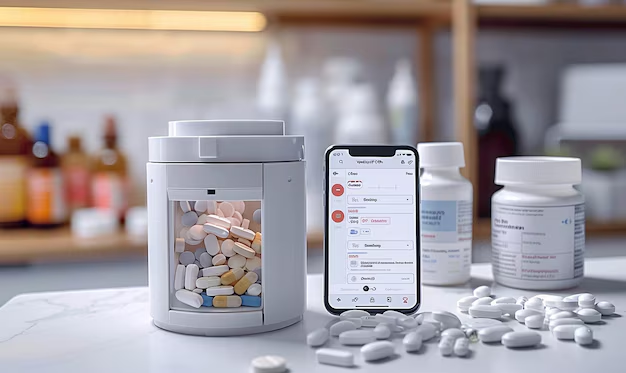
What Is an AI Smart Pill Dispenser?
An AI Smart Pill Dispenser is a smart medical device designed to:
- Organize and store medications securely
- Dispense pills at prescribed times
- Use AI and machine learning to monitor adherence
- Send alerts to caregivers and family members
Unlike a regular pill organizer, AI smart dispensers learn individual routines, adapt schedules as needed, and provide real-time health insights — making them a cornerstone technology in assisted living and home healthcare for seniors.
Why AI Smart Pill Dispensers Are Essential for Seniors and Chronic Care Patients in 2026
By early 2026, with the global aging population surpassing 1.6 billion people over 60, these dispensers have become indispensable for seniors, those with chronic conditions like diabetes or heart disease, and their caregivers. The smart pill dispenser market, valued at approximately $3.66 billion in 2026, is on track to grow rapidly amid rising demands for remote health solutions, with projections reaching $7.56 billion by 2035 at a CAGR of 8.3%. Innovations in 2026 emphasize AI-driven personalization, such as adaptive scheduling via wearable data and voice-activated interfaces compatible with Alexa or Siri.
Key Features Driving Adoption of AI Smart Pill Dispensers for Medication Adherence in Early 2026
Features like facial recognition for secure dispensing and predictive analytics for non-adherence risks are now standard, reducing errors that contribute to 125,000 preventable U.S. deaths annually from medication mismanagement. Recent early-year updates include AI-powered predictive analytics for adherence forecasting and enhanced IoT connectivity for remote monitoring, further boosting adoption. For users juggling polypharmacy—often 5+ daily meds—these devices promote independence, cut caregiver burden, and integrate with electronic health records (EHRs) for proactive interventions. As telehealth rebounds post-pandemic, AI dispensers bridge gaps in home care, potentially saving $300 billion yearly in non-adherence costs.
This guide explores their workings, benefits, and top 2026 picks to help you select the ideal solution for medication adherence and smart health management.
How AI Smart Pill Dispensers Work: A Step-by-Step Guide to Automated Medication Dispensing in 2026
AI smart pill dispensers fuse durable hardware—modular trays, biometric locks, and motion sensors—with cloud-based AI software for a user-centric experience. This creates an adaptive system that dispenses meds accurately while evolving with user habits, incorporating early-2026 advancements like computer vision for pill identification.
Step 1: Easy Setup and Medication Loading for AI Smart Pill Dispensers for Beginners in 2026
Begin by loading compartments via app-guided scanning of prescriptions using OCR and AI to map dosages and flag interactions (e.g., via FDA databases). Premium models like MedaCube auto-sort up to 16 meds for 90 days; others support 7–10 types with visual aids for dexterity challenges, now enhanced with AI to prevent look-alike drug mix-ups.
Step 2: Customizing Schedules with AI Personalization for Chronic Medication Management
Input regimens through apps, touchscreens, or NLP voice commands. AI analyzes routines from synced wearables (e.g., heart rate variability) to customize timings, adjusting for meals or sleep patterns. Machine learning refines this; for instance, EllieGrid’s sensors adapt alarms to weekends, with new 2026 predictive models flagging potential discrepancies in prescriptions.
Step 3: Automated Dispensing and Multi-Modal Reminders in Best AI Pill Dispensers 2026
Timed release via secure trays (fingerprint or facial scan in Pria) drops exact doses. Alerts escalate multi-modally: chimes, lights, vibrations, or AI-voiced prompts like “Your blood pressure med is ready.” Sensors confirm intake, triggering escalations if missed, bolstered by real-time IoT updates for remote caregiver verification.
Step 4: Real-Time Monitoring and AI-Powered Analytics for Medication Adherence Tracking
Cameras and weight sensors log adherence, with AI detecting anomalies (e.g., 20% dip in compliance). Cloud dashboards generate insights, like “Missed doses correlate with low activity,” shared HIPAA-securely with doctors via EHR APIs, now including enhanced security features like blockchain for data integrity.
Step 5: Smart Alerts, Refills, and Predictive Maintenance in AI Smart Pill Dispensers
Non-compliance prompts app/SMS/calls; AI forecasts stockouts and auto-orders from pharmacies. Predictive models, using neural networks, flag risks like travel disruptions, with January 2026 integrations allowing AI to adapt prescriptions based on patient data.
Step 6: Advanced Security Features and Long-Term Reliability for Senior Pill Dispensers
Tamper locks, geofencing, and encryption safeguard access. Batteries endure 7–30 days with backups; OTA updates add features like multilingual AI, reflecting early-2026 trends in bias-free federated learning.
Emerging 2026 Innovations in AI Smart Pill Dispenser Technology for Home Healthcare
2026 advancements include federated learning for bias-free personalization, IoT for remote tweaks, and AI robotic dispensing with computer vision, making these devices empathetic health companions that lighten cognitive loads for dementia patients.
Benefits of AI Smart Pill Dispensers: Boosting Health, Independence, and Adherence in 2026
Medication non-adherence plagues 50% of chronic patients, inflating healthcare costs by $300 billion annually in the U.S. AI smart dispensers counter this with targeted innovations, delivering quantifiable wins amid a market valued at $3.66 billion in 2026.
Benefit 1: Dramatically Improved Adherence and Medication Safety with AI Pill Dispensers
Personalized AI reminders lift compliance by 30–50%, slashing errors like double-dosing. Interaction checks prevent issues, such as reduced efficacy from conflicting supplements, while precise motors ensure 99% accuracy, enhanced by 2026 computer vision tech.
Benefit 2: Promoting Senior Independence and Aging in Place with Smart Pill Dispensers
Automating routines enables aging in place, reducing facility needs by 25%. Voice and light guides support mobility-limited users, boosting quality-of-life scores by 35%, with new remote monitoring features extending independence further.
Benefit 3: Caregiver Peace of Mind Through Remote Monitoring in AI Medication Dispensers
Real-time alerts and analytics cut oversight by 60%, with video verification (e.g., Omcare) for quick checks. Families intervene early, averting 20% of ER visits, amplified by IoT connectivity updates in early 2026.
Benefit 4: Achieving Better Long-Term Health Outcomes for Chronic Conditions via AI Dispensers
Steady dosing stabilizes conditions—e.g., 18% stroke risk drop for hypertension—via integrated metrics like HbA1c tracking. AI predictions enable preemptive care, lowering hospitalizations 20–30%, with predictive analytics now standard.
Benefit 5: Significant Cost Savings on Healthcare Expenses with Top AI Smart Pill Dispensers
Avoid $1,200–$2,000 yearly in fees; many are HSA/FSA-eligible or Medicare-covered. Long-term, no-sub models like MedaCube save thousands vs. subscriptions, aligning with market growth to $6.78 billion by 2033.
Benefit 6: Seamless Scalability and Smart Home Integration for AI Pill Dispenser Users
AI syncs with telehealth, EHRs, and smart homes, suiting diverse settings. Ethical features like multilingual prompts ensure inclusivity, with 2026 ML adapting to cultural routines via advanced IoT.
Overall, these devices transform adherence from burden to empowerment, fostering proactive wellness in an AI-augmented era.
Best AI Smart Pill Dispensers in 2026: Top Recommendations and Comparisons for Medication Adherence
Curated from early-2026 reviews, these AI-enhanced dispensers prioritize usability, capacity, and value, reflecting market leaders like MedaCube and Hero. Prices are January 2026 estimates; check for subsidies.
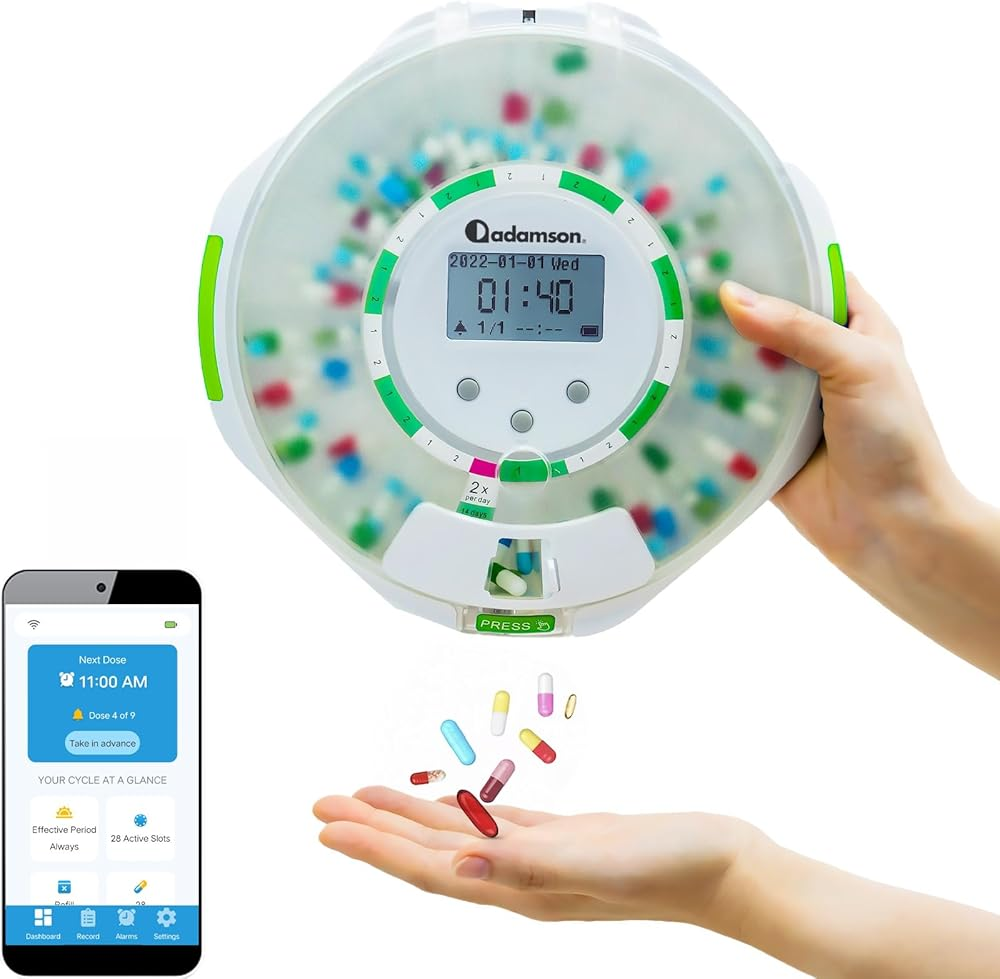
Comparison Table: Key Features of Top AI Smart Pill Dispensers for Seniors 2026
| Dispenser | Key Features | Pros | Cons | Price (2026) |
|---|---|---|---|---|
| MedaCube 2.0 | 90-day supply for 16 meds; AI alerts, real-time photos, cloud monitoring; WiFi/cellular; tamper lock; as-needed dosing. | Highest capacity; no sub; dementia-safe; 5-yr cost $1,999; 99% accuracy. | Upfront investment; setup techy. | $1,999 one-time |
| Hero | 90-day supply for 10 meds; AI interaction checks, app tracking, auto-refills; WiFi alerts; passcode security. | Hands-off; free trial; pharmacy sync; tracks external meds. | Subscription; no cellular. | $30–$45/month |
| MedMinder | 28 compartments (up to 12 pills); AI sorting, EHR reports; LTE/WiFi; refill delivery; customizable reminders. | Clinical integration; versatile alerts; waived init fee often. | High long-term cost; data sharing. | $125/month + $100 init |
| EllieGrid | 7 med types (weekly supply); ML adaptive alarms, sensors for adherence; Bluetooth app; light guides; caregiver texts. | Stylish, affordable; routine-learning AI; HSA-eligible. | Limited capacity; Bluetooth-only. | $149 one-time |
| Omcare Home Health Hub | AI scheduling, video telehealth, med dispensing; multi-user sensors; remote verification. | Family sharing; expandable; 6-mo free sub. | Bulkier; sub after promo. | $1,599 one-time + $20/month |
| Pria (Black+Decker) | Facial recognition, voice commands; routine reminders; app alerts; compact for 28 doses. | Secure dispensing; smart home ties; engaging interface. | Smaller scale; availability varies. | $80–$150 one-time |
| LiveFine WiFi | 28-day for 9 meds; AI app alerts; lockable; UV protection; sound/light alarms. | Budget entry; versatile power; easy setup. | Basic capacity; no advanced AI. | $90–$200 one-time |
Why MedaCube 2.0 Is the Best Overall AI Smart Pill Dispenser for Polypharmacy in 2026
MedaCube leads for complex needs with its photo verification and no-sub model, earning top spots in reviews for 99% accuracy—ideal for high-volume polypharmacy users, updated with 2026 IoT enhancements.
Hero: The Top Choice for Subscription-Based AI Pill Dispensers and Auto-Refill Simplicity
Hero suits simplicity seekers with seamless refills and AI interaction checks, perfect for busy caregivers, maintaining its runner-up status in January reviews.
Budget-Friendly AI Smart Pill Dispensers: EllieGrid and LiveFine for Beginner Medication Management
For AI flair, EllieGrid’s ML alarms adapt intuitively. Budget? LiveFine delivers essentials affordably without overwhelming features, praised for UV protection in 2026 updates.
App-Only Alternatives for Light Medication Management with AI Reminders in 2026
App-only like Medisafe (free) works for light users, offering basic AI reminders without hardware, complementing hardware options.
How to Choose the Right AI Smart Pill Dispenser for Seniors and Chronic Care Needs
Tailor to needs—consult docs for fits, considering capacity, connectivity, and integration for optimal medication adherence, especially with new predictive features.
Conclusion: Revolutionizing Medication Management with AI Smart Pill Dispensers in 2026
AI smart pill dispensers in 2026 aren’t just tools—they’re compassionate allies in the quest for healthier, independent lives. By harnessing predictive AI and seamless integrations, they tackle adherence head-on, promising fewer crises and more vitality amid a market valued at $3.66 billion this year.
The Future of AI Smart Pill Dispensers in Home Healthcare and Telehealth Integration
As trends lean toward empathetic ML, AR enhancements, and genomic-personalized care, expect continued growth to $7.56 billion by 2035.
Final Tips for Implementing Best AI Smart Pill Dispensers for Medication Adherence
Choose based on your regimen: MedaCube for volume, Hero for ease. Pair with professional advice to unlock full potential—your well-being deserves it.
AI Smart Pill Dispensers in 2026 are not just gadgets — they are life-enhancing tools that improve medication safety, support independence, and strengthen caregiver peace of mind. With powerful AI, real-time tracking, and remote connectivity, these devices are at the forefront of elderly care technology.
Whether you’re caring for aging parents, managing chronic conditions, or helping a loved one stay independent, an AI smart pill dispenser should be at the top of your safety toolkit.
About the Author