The Future of Artificial Intelligence
Introduction
Artificial Intelligence (AI) is changing the world faster than any technology before it. From smartphones and smart homes to self-driving cars and online assistants, AI is everywhere. Among all AI technologies, Generative AI has become the most powerful and revolutionary innovation in recent years.
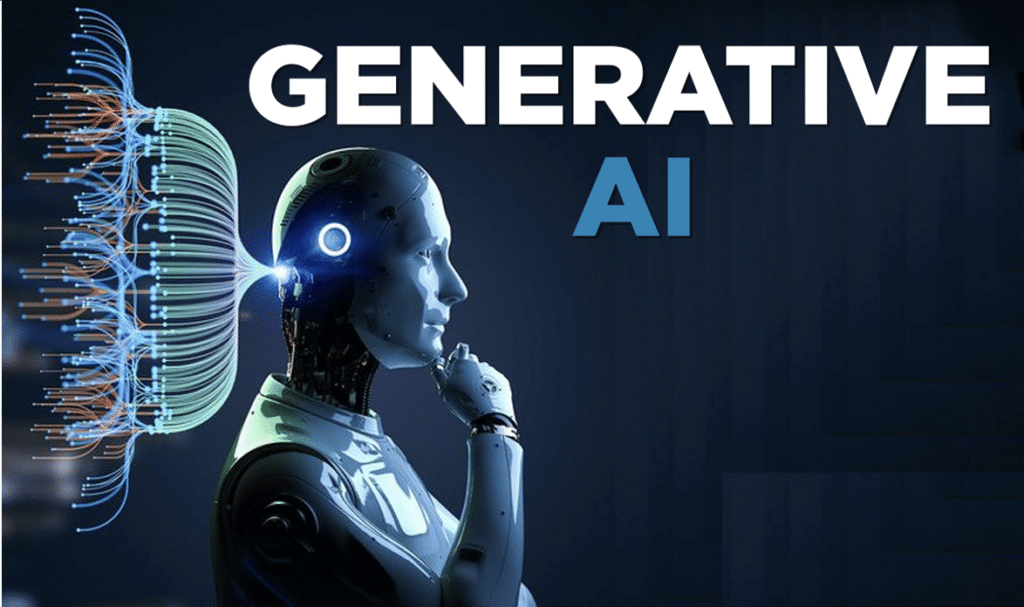
Generative AI is the technology behind tools like ChatGPT, Midjourney, DALL·E, Google Gemini, and Sora. These tools can write articles, generate images, create music, produce videos, and even write computer code just like humans.
In this article, you will learn:
- What Generative AI is
- How it works
- Real-world examples
- Popular Generative AI tools
- Benefits and risks
- Future of Generative AI
This is a complete beginner-to-advanced guide, perfect for students, professionals, and AI enthusiasts.
What is Generative AI?
Generative AI is a type of Artificial Intelligence that can create new content such as:
- Text
- Images
- Audio
- Video
- Code
- 3D designs
Unlike traditional AI, which only analyzes or predicts outcomes, Generative AI produces original content by learning patterns from existing data.
Simple Definition
Generative AI is an AI system that learns from data and generates new, human-like content.
Generative AI vs Traditional AI
| Feature | Traditional AI | Generative AI |
|---|---|---|
| Purpose | Analyze & predict | Create new content |
| Output | Yes/No, numbers | Text, images, audio |
| Creativity | No | Yes |
| Examples | Face detection | ChatGPT, DALL·E |
Traditional AI answers questions.
Generative AI creates something new.
How Does Generative AI Work?
Generative AI works using Machine Learning, Deep Learning, and Neural Networks.
Step-by-Step Process
- Data Collection
Large amounts of text, images, audio, or video are collected. - Training the Model
AI learns patterns, grammar, structure, and relationships. - Neural Networks & Transformers
Advanced models like Transformers help understand context. - Content Generation
When a user gives a prompt, AI generates a new response based on learned data.
Example
If you type:
“Write a blog on AI in education”
The AI:
- Understands language
- Predicts the next best words
- Creates a meaningful article
Types of Generative AI
1. Text-Based
Used for writing, chatting, summarizing, and coding.
Examples:
- ChatGPT
- Google Gemini
- Jasper AI
2. Image
Creates realistic or artistic images from text prompts.
Examples:
- Midjourney
- DALL·E
- Imagen AI
- Stability AI
3. Audio & Voice AI
Generates voice, music, and sound effects.
Examples:
- Murf AI
- ElevenLabs
- AssemblyAI
4. Video
Creates videos from text prompts.
Examples:
- Sora (OpenAI)
- Runway ML
- Pika Labs
5. Code
Helps programmers write and debug code.
Examples:
- GitHub Copilot
- ChatGPT
- Amazon CodeWhisperer
Popular Tools
🔹 ChatGPT (OpenAI)
- Text generation
- Coding help
- Chatbot functionality
- Education and business use
🔹 Midjourney AI
- High-quality AI image generation
- Popular among designers and artists
🔹 DALL·E
- Converts text into images
- Useful for marketing and creatives
🔹 Google Gemini
- Advanced AI chatbot by Google
- Integrated with Google services
🔹 Jasper AI
- AI content writing for marketing
- SEO-focused text generation
Real-World Applications
1. Education
- Notes generation
- Exam preparation
- Personalized learning
- AI tutors
2. Content Creation
- Blog writing
- Social media posts
- Video scripts
- Email marketing
3. Business & Marketing
- Product descriptions
- Ads copy
- Customer support chatbots
4. Healthcare
- Medical report summaries
- Drug discovery
- Patient assistance
5. Software Development
- Code writing
- Bug fixing
- App development
6. Creative Arts
- Digital paintings
- Music composition
- Story writing
Generative AI in Daily Life
Today, Generative AI is already part of everyday life:
- Chatbots on websites
- Voice assistants
- AI photo editors
- Recommendation systems
- Smart AI gadgets
Websites like AiGadgetX focus on how AI improves family life, safety, and productivity.
Benefits of Generative AI
✅ Time Saving
Creates content in seconds.
✅ Cost Effective
Reduces need for large teams.
✅ Creativity Boost
Generates ideas and designs.
✅ Personalization
Customized content for users.
✅ Automation
Improves efficiency in businesses.
Risks and Challenges of Generative AI
⚠️ Fake Content & Deepfakes
AI can generate misleading information.
⚠️ Copyright Issues
Who owns AI-generated content?
⚠️ Bias in AI
AI may reflect biased data.
⚠️ Job Displacement
Automation may affect some jobs.
⚠️ Over-Dependency
Too much reliance on AI reduces human creativity.
Generative AI and Ethics
Ethical AI use is critical:
- Transparency
- Data privacy
- Responsible usage
- Human oversight
Governments and companies are now working on AI regulations.
Generative AI vs AI vs Machine Learning
| Term | Meaning |
|---|---|
| AI | Broad field of intelligent machines |
| Machine Learning | AI that learns from data |
| Deep Learning | ML using neural networks |
| Generative AI | AI that creates new content |
Future of Generative AI
The future of Generative AI is powerful and exciting:
- AI-generated movies
- Fully AI-designed products
- Personalized AI assistants
- Smarter AI gadgets
- AI-powered education systems
Experts believe Generative AI will become as common as smartphones.
Generative AI for Beginners: How to Start?
- Try ChatGPT
- Explore AI image tools
- Learn basic AI concepts
- Use free AI tools
- Follow AI websites like AiGadgetX
SEO FAQs (For Google Ranking)
❓ What is Generative AI?
Generative AI is an AI technology that creates new content like text, images, audio, and video.
❓ Is ChatGPT a Generative AI?
Yes, ChatGPT is a text-based Generative AI model.
❓ Is Generative AI dangerous?
It can be misused, but responsible usage makes it beneficial.
❓ Can Generative AI replace humans?
No. It supports humans but cannot replace creativity and decision-making.
Conclusion
Generative AI is not just a trend—it is a technological revolution. From education and business to art and daily life, it is transforming how humans create, learn, and work.
Understanding Generative AI today prepares you for the future.
If you want to stay updated with the latest AI tools, gadgets, and innovations, platforms like AiGadgetX are the perfect place to start.
❓ Frequently Asked Questions (FAQ) – Generative AI
1. What is Generative AI?
Generative AI is a type of artificial intelligence that creates new content such as text, images, audio, video, and code by learning patterns from existing data.
2. How is Generative AI different from traditional AI?
Traditional AI analyzes data and makes predictions, while Generative AI creates original content like articles, images, music, and videos.
3. Is ChatGPT an example of Generative AI?
Yes. ChatGPT is a text-based Generative AI tool that can write, explain, summarize, and generate human-like responses.
4. What are the most popular Generative AI tools?
Some popular Generative AI tools include ChatGPT, Midjourney, DALL·E, Google Gemini, Jasper AI, and Sora.
5. How does Generative AI work?
Generative AI uses machine learning, deep learning, and neural networks. It learns from large datasets and generates new content when users provide prompts.
6. What are the real-world uses of Generative AI?
Generative AI is used in education, content creation, business, healthcare, software development, marketing, and creative arts.
7. Is Generative AI safe to use?
Yes, Generative AI is safe when used responsibly. Risks such as fake content and data privacy can be reduced with ethical use and proper regulations.
8. Can Generative AI replace humans?
No. Generative AI supports humans by improving productivity and creativity, but it cannot replace human thinking, emotions, and decision-making.
9. What are the benefits of Generative AI?
Key benefits include time savings, cost reduction, automation, personalized content, and enhanced creativity.
10. What are the risks of Generative AI?
Major risks include deepfakes, copyright issues, bias in AI models, job displacement, and over-dependency on AI.
11. What is the future of Generative AI?
The future includes AI-generated movies, personalized AI assistants, smart AI gadgets, AI-powered education, and advanced automation.
12. How can beginners start learning Generative AI?
Beginners can start by using tools like ChatGPT, learning basic AI concepts, experimenting with AI image generators, and following AI platforms like AiGadgetX.
About the Author